
Impact Measurement for Creative Enterprises
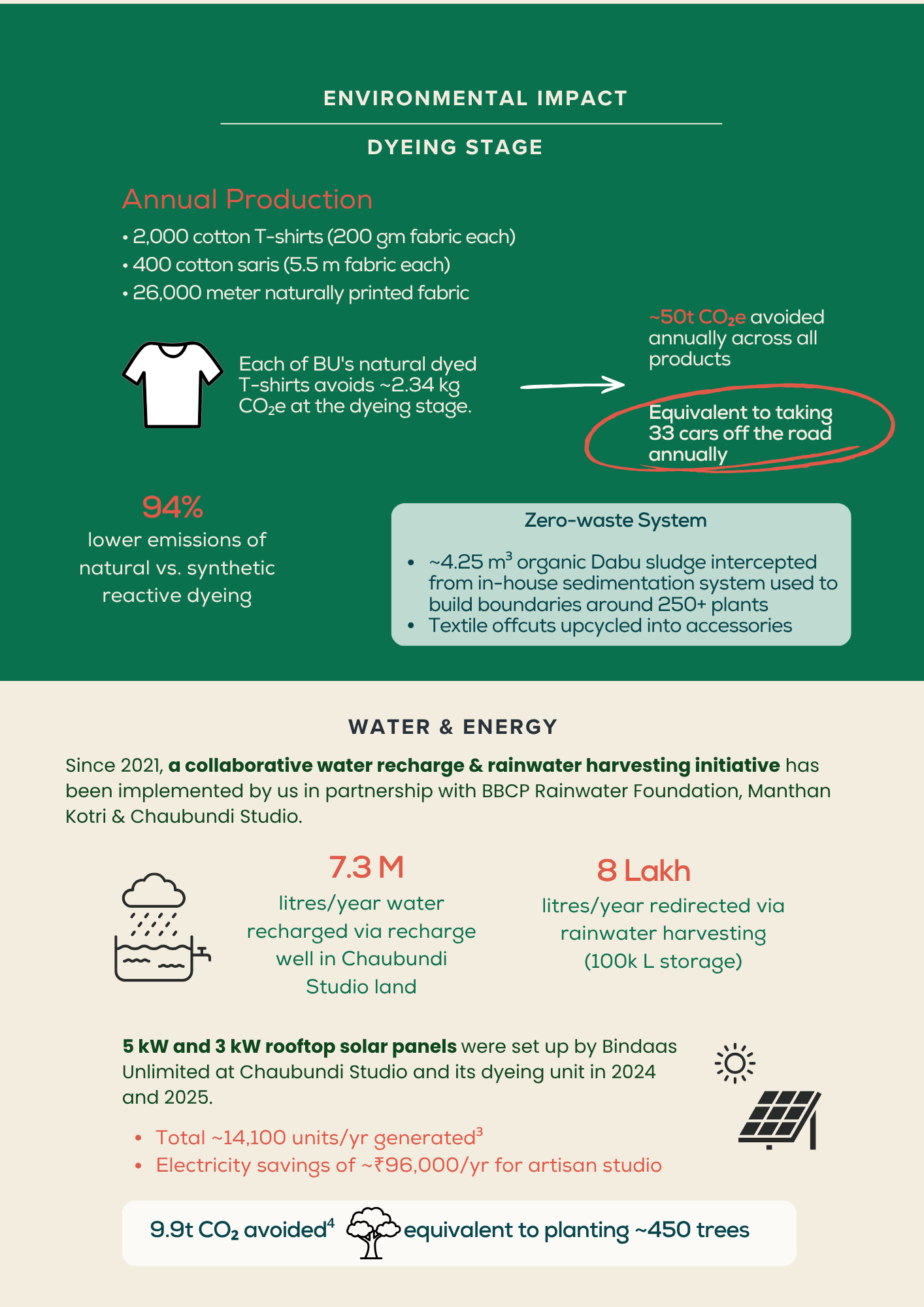
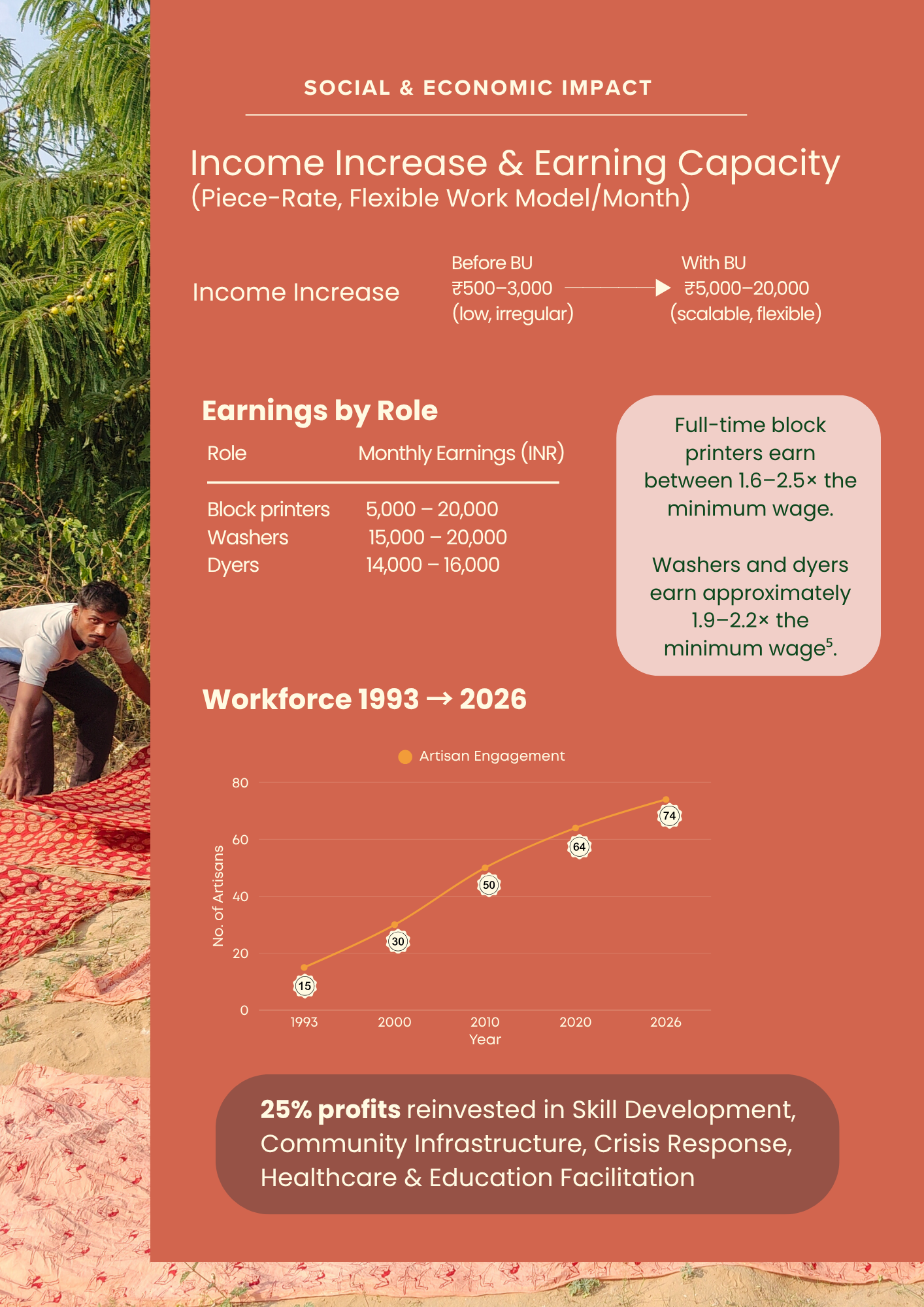
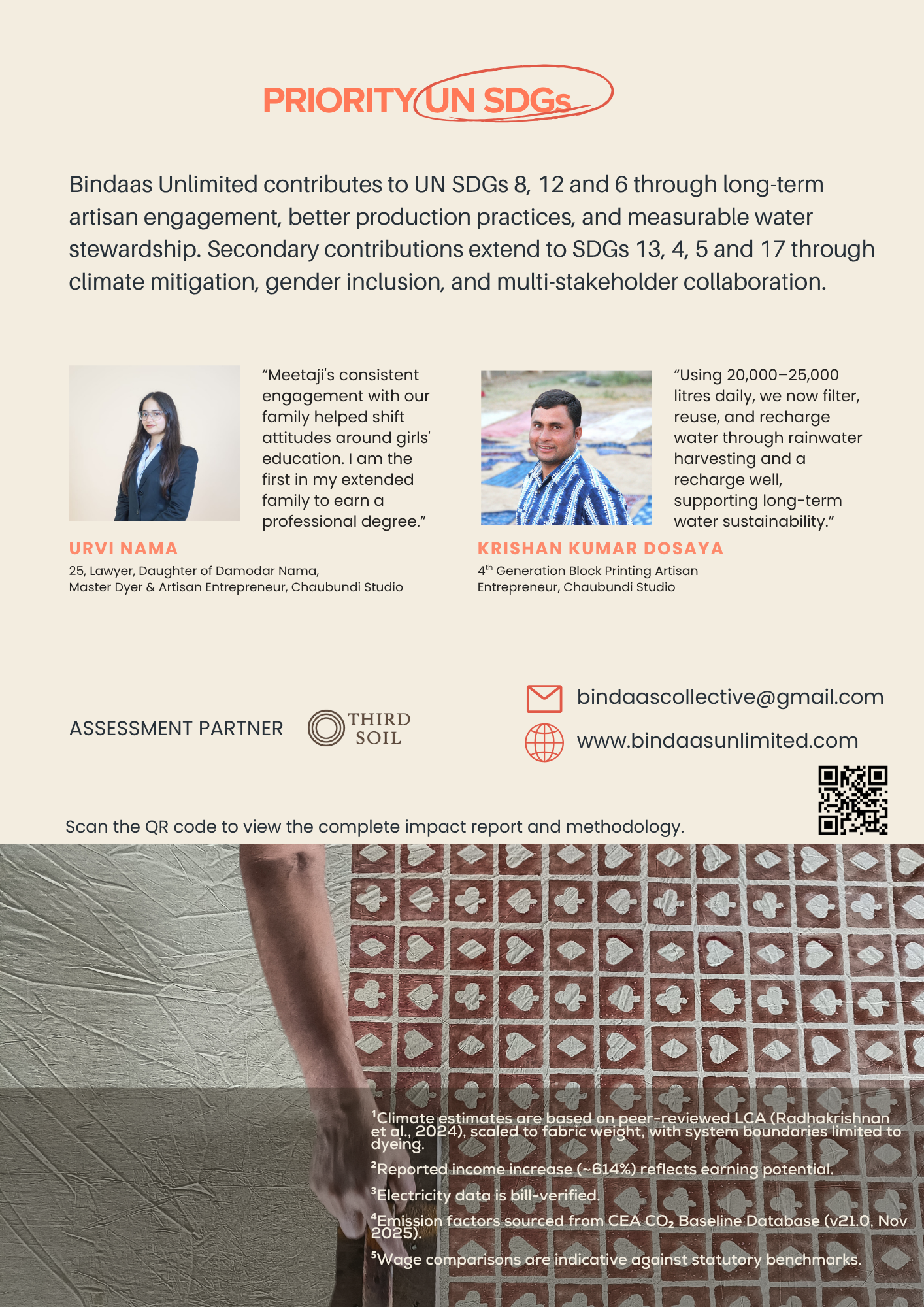
Snapshot of Third Soil’s Assessment of Bindaas Unlimited
What We Offer:
Impact report based on social and environmental credentials using globally recognized frameworks:
SROI (Social Return on Investment): A recognised framework that quantifies the social, environmental, and economic value created by an initiative. Eg., for every ₹1 invested in a craft training program, ₹3 of social value (in income, well-being, and community resilience) is generated.
Textile Exchange’s Biodiversity Benchmark
(Until India evolves its own textile-biodiversity framework, this provides a credible reference.)
Map your enterprise’s biodiversity impact and dependencies, from soil and water health to species engagement.
E.g., If you're a block printing enterprise, think water use, disposal & recharge; impact of azo, azo-free & natural dyes
Link community participation and local livelihoods to positive social actions.
“The lack of global best-practices and tools to measure and quantify creativity-led solutions makes it harder for HCMs to effectively articulate the impact of their
work.”
Why Handmade Needs Hard Data
The Challenge
While there’s abundant anecdotal and qualitative evidence on the social and cultural benefits of craft-led value chains, there remains a critical lack of data-driven assessments and formal records of their environmental and social performance.
Our Methodology:
Draws on peer-reviewed industry reports, scientific literature and place-based research.
Maps outcomes to relevant UN Sustainable Development Goals (SDGs), especially those focused on poverty alleviation, gender equality, and decent work.
Social Return on Investment (SROI), Fair Wage Assessment, Social and Health Benefit, Indicators of Prosperity (as per UNEP S-LCA Guidelines, 2020)
Theory of Change Models: Used to map informal economy actors' inputs, activities, outputs, and long-term impacts.
Participatory Methods: Engaging communities in co-defining what 'value' means to them (e.g., well-being, safety, dignity).
Qualitative Indicators: Narratives, case studies, and community testimonials as evidence.
Hybrid Models: Combining qualitative methods with lightweight quantitative tools such as outcome mapping, Most Significant Change (MSC), and well-being indices.
Why Work With Us
LCA and Impact Measurement is done by a Harvard- and IIM-K certified professional, with a decade’s experience working with Indian craft enterprises and textile value chains - bringing a deep understanding of your materials, your methods, and your challenges.